
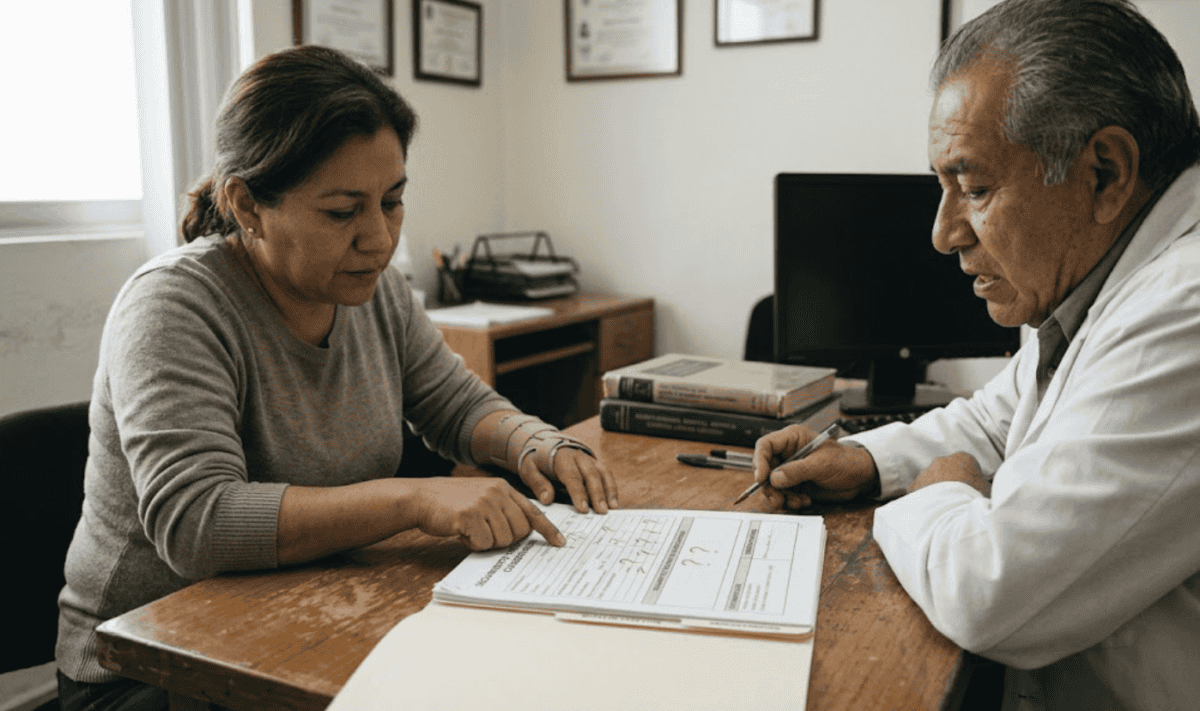
Providing excellent chronic wound care means you must master your failed conservative treatment documentation protocol.
Without proper failed conservative treatment documentation, Medicare will refuse to pay for your advanced tissue grafts. When standard bandages and wraps fail to heal a stubborn ulcer, or wound, you need to prove it to the insurance companies before you change your treatment plan.
If your clinical staff spends hours guessing what notes to write, patient care naturally suffers. That’s why our White Glove Wound Care service helps clinics build better, faster charting habits. By learning how to record your basic care steps correctly, you can prove medical necessity and secure rapid approvals for the advanced therapies your patients desperately need.
Medicare enforces a very strict timeline before they’ll pay for biological skin substitutes. You can’t simply apply an advanced graft on a patient's first visit. The government requires you to perform standard, basic care first.
You must provide standard care for at least four full weeks, or 30 days. During this month, you must create a detailed paper trail. Your failed conservative treatment documentation is the only proof Medicare accepts to justify moving to the next level of care.
If you skip this step, reviewers will assume a cheaper bandage would’ve worked perfectly fine. Your claim will be denied.
The goal of your clinical notes is to show that you tried all standard procedures and that the wound did not heal. This proves to the auditor that the expensive biological graft is a medical necessity, not a preference.
Standard care includes a very specific set of medical actions.
First, you must manage any active infection in the wound bed. You must prescribe the correct antibiotics and document their effect on the patient.
Second, you must perform regular debridement. Debridement means removing dead or infected tissue from the wound bed. This helps healthy tissue grow.
Third, you must use proper offloading devices for lower-body wounds. If a patient has a diabetic foot ulcer, you must provide a special boot or shoe. This removes the physical pressure from the foot so it can heal.
You must write down every standard treatment you try.
Your clinical notes are your strongest shield during a sudden government audit. Writing perfect failed conservative treatment records requires attention to tiny details. You must paint a clear picture of the patient and their specific physical struggles.
State the exact date the wound first appeared on the body.
List every standard therapy you applied during the mandatory 30-day window. Don’t use vague language like "the wound looks bad today." Use precise numbers and exact measurements.
Write down the exact millimeter changes in the wound size. Note the specific color of the tissue and the amount of fluid draining from the area.
Prove to the auditor that you tried everything possible before moving to expensive biological products. Clear reporting proves your clinical expertise and keeps your practice protected.
Proving that standard care failed is only the first part of the process. The next part is showing why an advanced graft is necessary.
You must connect the failure of cheap bandages to the direct need for an amniotic membrane. Explain how the advanced product will heal the patient’s chronic wound.
For example, if the wound is stuck in an inflammatory phase, explain how the graft will calm that inflammation down. If the patient suffers from severe diabetes, explain how this disease stops normal healing.
Connect the patient’s health history to your final treatment choice. Make it obvious to the insurance reviewer that the skin substitute is the only logical option left. When your medical reasoning is this strong, Medicare pays your claims much faster.
Creating a flawless patient chart requires attention to specific clinical details. You must tell a detailed story of what you did to help the wound close. Effective failed conservative treatment reporting always includes four main categories of care.
If you treat a Diabetic Foot Ulcer (DFU), you must prove that you removed the physical pressure from the wound. Walking on an ulcer destroys new tissue instantly.
Your notes must list the exact offloading tools you gave the patient. Write down if you used a total contact cast, a specialized walking boot, or custom diabetic shoes.
If the patient refused to wear the boot, you must document their non-compliance clearly in their file. Showing your attempts to offload the pressure is a vital part of your failed wound care charting.
If you treat a Venous Leg Ulcer (VLU), swelling is your biggest enemy. Fluid buildup in the lower leg prevents healthy blood flow and stops the healing process completely.
To create viable reports, you must list your compression methods. Detail your use of multi-layer compression wraps or specialized stockings.
You also need to note how often you changed these wraps and if the patient's leg swelling went down during the 30-day trial period.
Advanced skin grafts will fail immediately if you place them over an active infection. Medicare wants to see that you actively controlled the bacteria in the wound bed.
Your failed conservative treatment documentation should list any oral antibiotics you prescribed. It should also detail your use of antimicrobial cleansers, silver-based dressings, or specialized saline washes.
Documenting a clean, infection-free wound bed proves the site is actually ready to accept a biological tissue graft.
Wounds heal from the inside out. If a patient has terrible blood sugar or poor nutrition, their skin won’t repair itself.
You must track the patient's systemic health in your charting. Record their recent HbA1c levels to show how you’re managing their diabetes. Note your talks about a high-protein diet to support tissue growth.
If the patient smokes, explain clearly that you warned them about the dangers of tobacco for vascular health.
Many busy clinics lose money because they make simple mistakes in their medical software.
One major mistake is using cloned notes. Cloned notes happen when a doctor copies the text from last week and pastes it into today's visit. This saves time, but it ruins your case. Auditors hate cloned notes because it looks like you didn’t actually examine the wound.
Another big mistake is missing photographic proof. Words are important, but pictures provide undeniable truth. You should take a clear, bright picture of the wound every week. Always place a paper measuring tape right next to the open tissue in the photo and write the date on the paper tape.
If Medicare questions your written notes, the photograph instantly proves your measurements are accurate.
Building good habits stops claim denials before they happen.
Managing complex federal rules takes much time away from your daily clinic schedule. You want to offer advanced products without staying late every night to finish your admin.
RenewMed is your dedicated operational partner. We make sure every amniotic product we supply is fully Medicare-eligible. We offer full reimbursement support, starting from your very first patient note all the way to final claims processing.
Our team reviews your files to ensure your failed conservative treatment documentation is correct. It’s one way we help protect your clinic from costly delays.
What must I include in my failed conservative treatment documentation?
You must include exact wound measurements, clear photos, and a detailed list of every basic therapy you tried. You must explicitly state why those basic therapies did not work.
Do I need to manage the Insurance Verification Request myself?
No. Our White Glove Service handles the IVR process for your clinic. We verify the patient coverage so you can focus on providing excellent medical care.
Does Medicare care if my patient refuses to wear their offloading boot?
Yes. Patient non-compliance is a major factor. If the patient refuses to follow your offloading instructions, you must document their refusal in your daily notes to protect your clinic from an audit.
Can I leave the wound depth measurement blank if it is a shallow ulcer?
No. Leaving measurements blank triggers automatic claim denials. Always write down a specific number, even if the depth is only 0.1 centimeters, to prove you performed a complete assessment.
Does RenewMed review my clinical notes before billing?
Yes. Our dedicated support team helps review your patient charts to ensure all your measurements and basic care notes meet Medicare's strict standards before the claim goes out.
Providing advanced clinical care should never threaten the financial health of your practice. Writing perfect medical charts keeps your clinic safe, profitable, and ready to heal more people.
RenewMed is your dedicated partner to supply the best eligible products on the market. We provide the user-friendly templates and billing support you need to secure your payments easily. Simply, reach out to our expert team to discuss your current billing needs.
Schedule your consultation today.
Let’s create better healing stories, one patient at a time.
Sources Used
Disclaimer: This content is created for licensed healthcare professionals, offering educational insights into wound care. It is not intended as medical advice or to replace your own clinical judgment when treating patients. We're here to support you, but the final treatment decisions should always be based on your professional evaluation of each unique patient's needs.
