Medicare Coverage Skin Substitutes: Your 2026 Guide to Getting Paid

The landscape of wound care reimbursement has undergone its most significant shift in a decade. For years, providers relied on a relatively stable system, but the 2026 Medicare Physician Fee Schedule (PFS) Final Rule has fundamentally altered the terrain.

Understanding Medicare’s coverage for skin substitutes is no longer just about clinical efficacy, but a critical skill for your practice’s revenue cycle.

This year, the Centers for Medicare & Medicaid Services (CMS) moved away from the traditional biological classification for many products, reclassifying them as "incident-to" supplies. This change, coupled with a standardized payment rate, aims to curb spending but adds complexity for providers.

Let’s go through these changes, piece by piece, so you can continue to heal patients without risking your financial stability.


The Core Shift: From Biologicals to "Incident-To" Supplies

In the past, most skin substitutes were paid as biologicals under a formula known as ASP (Average Sales Price) plus 6%. This allowed for variable pricing based on the specific product's market cost.

What Changed in 2026?

CMS has reclassified the vast majority of skin substitute products, specifically those not licensed under Section 351 of the Public Health Service Act, as "incident-to" supplies.

This means they’re now viewed legally as supplies necessary to perform the procedure (the application), rather than distinct biological drugs.

The New Flat Rate

Instead of individual prices, CMS has instituted a single, flat national payment rate for these products. For 2026, this rate is set at approximately $127.14 per square centimeter.


Medicare Coverage Skin Substitutes: Coverage Criteria Explained

While payment mechanisms have changed, the clinical criteria for coverage, the reasonable and necessary standard, remain stringent. Medicare doesn’t pay for these advanced therapies as a first-line treatment.

The 30-Day Rule

To qualify for reimbursement, a wound must be classified as chronic. This means it has existed for at least 30 days and has not responded significantly to standard conservative therapy.

Defining Failed Response

It’s not enough to say the wound didn't heal. You must document quantitative evidence.

Standard of Care Requirements

Before you open a graft, your notes must prove you tried the basics:


The ASP List vs. The New Supply Category

You might wonder: Does the ASP list still matter? The answer is nuanced.

Section 351 Products

A small number of products (true biologicals) still reside on the ASP list and are paid under the old methodology.

The Majority

Most products are now off the ASP pricing model and subject to the flat rate. However, using products that have historically established themselves with clear Q-codes or A-codes is still vital for claims processing.

The RenewMed Method

We curate our product offerings to align with this new reality. We ensure you have access to grafts that aren’t only effective for complex wounds but also financially viable under the $127.14/sq cm rule.


Critical Documentation Required for Medicare Reimbursement

In 2026, documentation is your only defense against clawbacks. Auditors are aggressively targeting skin substitute claims due to the historically high spending in this sector.

A generic note saying graft applied will be denied.

Your Documentation Checklist

  1. Detailed Wound Assessment. Every visit must record length, width, and depth. Use photos to support your measurements.
  2. Product Specifics. You must record the brand name, the specific serial number or lot number, and the expiration date of the graft used.
  3. Wastage is (Mostly) Gone. Under the new "incident-to" rule for flat-rate products, the JW modifier (used for discarded drug waste) is generally no longer applicable. You’re paid per square centimeter applied. Check with your specific MAC, as interpretation can vary during this transition.
  4. Medical Necessity Statement. Your note must explicitly state why a graft is needed now. (e.g., Wound has stalled at 2.5cm x 3cm for 4 weeks despite weekly debridement and offloading.)


RenewMed’s White Glove Support

We provide more than just boxes of product. We act as an extension of your back office, protecting your practice from administrative risks.

Our White Glove Service includes:

Pre-Claim Review & IVR

We believe in preventing denials before they happen. Our team manages the Insurance Verification Request (IVR) process for you. We check every patient’s specific benefits, coverage limitations, and active deductibles before you open the package.

You’ll know exactly where you stand financially before you treat.

Billing & Appeals Partnership

If a claim is denied, you aren’t on your own. We connect you with specialized billing partners who understand the nuance of wound care coding. They can assist with redeterminations and appeals, fighting to secure the revenue you have earned.

A Dedicated Personal Consultant

You never have to contact a call center. You get a dedicated RenewMed consultant who knows your practice, your staff, and your patients. We’re your partner in both clinical outcomes and business success.


FAQs About Handling the 2026 Wound Care Changes

Can I still use any skin substitute I want?

Clinically, yes. Financially, no. If you choose a product that costs $200/sq cm, but Medicare only reimburses $127.14, you lose money on every application. You must align your clinical choice with the payment reality.

Does the "incident-to" rule apply to hospital outpatient departments (HOPDs)?

Yes, but the mechanism is slightly different. HOPDs also face a major shift: these products are now unpackaged and paid separately, but generally at the same standardized rate.

What happens if the wound improves but hasn't closed after 4 applications?

Most LCDs (Local Coverage Determinations) allow for a specific number of applications (often up to 10) within a 12-week episode of care, provided you document continued improvement. If the wound stalls again, coverage may cease.

Is the "standard of care" period always 4 weeks?

Generally, yes. However, some policies may allow earlier intervention if there is a rapid deterioration or specific comorbidities. Always check your local MAC's LCD.

How does RenewMed help if I get a denial?

Our billing partners specialize in wound care appeals. If you followed our documentation protocols and still face a denial, we can guide you through the redetermination process to fight for your revenue.


Partner with Us for Sustainable Healing

The goal of the 2026 changes is to standardize care and control costs, but for a busy provider, it feels like a hurdle. RenewMed bridges the gap.

We provide the high-quality grafts your patients need to avoid amputation, combined with the business intelligence you need to stay profitable.

Don’t let regulatory confusion compromise your patient care. We’re here to help you manage Medicare’s coverage for skin substitutes with confidence.

Let’s review your current product list and ensure you’re ready for the 2026 rules.


Contact us today.

Partner with us to restore quality of life, one patient at a time.

Sources Used

  1. https://www.cms.gov/newsroom/fact-sheets/calendar-year-cy-2026-medicare-physician-fee-schedule-final-rule-cms-1832-f
  2. https://www.hmpgloballearningnetwork.com/site/wounds/news/medicare-part-b-macs-withdraw-skin-substitute-lcds-what-we-know-and-what-remain

Disclaimer: This content is created for licensed healthcare professionals, offering educational insights into wound care. It is not intended as medical advice or to replace your own clinical judgment when treating patients. We're here to support you, but the final treatment decisions should always be based on your professional evaluation of each unique patient's needs.
Advanced Graft Treatments For Chronic Wounds: A Provider’s Guide

In wound care, there’s a distinct "tipping point" where a wound stops responding to basic interventions. You clean it, debride it, and apply a high-quality foam or alginate, but week after week, the measurements remain unchanged.

This plateau is the sign that standard care has reached its limit, and advanced graft treatments for chronic wounds are required.

For many clinicians, the hesitation to upgrade from standard dressings to advanced grafts stems from a lack of clarity. Yet, the distinction is vital:

Examining why standard methods fall short in chronic cases, how advanced grafts function biologically, and the operational considerations, like billing and compliance, helps providers make the shift confidently.

Why Standard Wound Care Has Limitations in Chronic Cases

To appreciate the value of advanced graft treatments for chronic wounds, we must first look at what standard care actually does.

Standard care includes moisture management, infection control, and offloading. It’s essentially a defensive strategy, creating an environment where the body can heal itself.

Passive Management

Standard dressings (gauze, foams, hydrocolloids) are passive. They absorb fluid or donate moisture, but they don’t interact with the cellular biology of the wound bed.

Reliance on Healthy Physiology

These methods assume the patient’s underlying physiology is sound. In a healthy 20-year-old, this works. In a 75-year-old Medicare patient with diabetes and vascular compromise, the physiology is broken.

The Chronic Cycle

Chronic wounds get stuck in an inflammatory cycle. They’re often characterized by a hostile microenvironment rich in proteases and low in growth factors. A passive dressing can’t correct this chemical imbalance; it can only manage the exudate produced by it.

Lack of Cellular Recruitment

Standard dressings act as a shelter, not a magnet. In a stalled wound with poor circulation, there’s no biological signal drawing healthy fibroblasts and stem cells from the wound margins into the center of the defect.

When you apply a standard dressing to a stalled chronic wound, you’re maintaining the wound, not advancing it.


What Makes Advanced Graft Treatments in Wound Care Different?

Advanced graft treatments for chronic wounds represent an offensive strategy. Instead of waiting for the body to generate new tissue, these grafts provide the biological resources the body is failing to produce.

These treatments, derived from amniotic membrane or other biologic sources, are distinct from standard care in four ways:

1. Structural Scaffolding (The ECM)

In a chronic wound, the Extracellular Matrix (ECM), the structural "lattice" that cells climb on to close a defect, is constantly being destroyed by enzymes.

Advanced grafts replace this lost ECM. They provide a native collagen scaffold that allows fibroblasts and keratinocytes to migrate across the wound bed, effectively bridging the gap.

2. Active Signaling

Unlike a piece of foam, advanced grafts are biologically active. They contain preserved signaling proteins and cytokines.

When applied, they signal the patient’s immune system to downregulate inflammation and upregulate tissue proliferation. They essentially "tell" the stalled cells to wake up and start working again.

3. Chemotaxis (Cellular Attraction)

Beyond signaling, these grafts use chemotaxis, a process that acts like a biological magnet. They actively recruit the patient’s stem cells and fibroblasts from the surrounding healthy tissue, drawing them into the wound bed to begin construction.

4. Bio-Integration

Standard dressings are removed at every visit. Advanced graft treatments for chronic wounds are different; they’re incorporated into the wound.

As the graft breaks down, it releases its growth factors directly into the tissue, becoming part of the healed wound rather than just a covering for it.


Patients Who Benefit from Advanced Grafts

Not every scratch needs a biologic. However, using these treatments for the right patient is critical for preventing complications.

You should consider these treatments for:

Clinical and Operational Considerations

Implementing advanced graft treatments for chronic wounds introduces new variables to your practice. Moving from a $5 dressing to a biologic graft requires attention to detail in clinical application and business operations.

Clinical Application

The application is generally straightforward but requires good wound bed preparation. The wound must be debrided aggressively to remove biofilm and senescent cells.

The graft must be placed in direct contact with the bleeding base to ensure it incorporates. If you place a graft over necrotic tissue, it will fail.

Inventory Management

Unlike gauze, these products are tracked. You need to log lot numbers and expiration dates. Some require freezer storage. However, many modern options are dehydrated and shelf-stable, making them much easier to store in a standard clinic cabinet.

Documentation and Compliance

This is the area that causes the most anxiety for providers. Because these are high-value products, payers, like Medicare, require specific documentation.

You must record the wound measurements, the failure of previous conservative treatments, and the medical necessity for the graft.

Mitigating the Risk of Advanced Care

The clinical argument for advanced graft treatments for chronic wounds is clear. The business argument, however, is often clouded by fear of reimbursement clawbacks or billing errors.

RenewMed is your support. Our White Glove Service is designed specifically to manage the risks associated with advanced modalities so you can focus on the rewards.

How We Protect Your Practice

Billing Accuracy

We don’t just sell you a product; we provide the expertise on how to bill for it correctly. We help you understand the specific codes and units to ensure your claims are clean.

Clawback Protection via Documentation

Audits happen. The best defense is perfect documentation. We provide templates and guidance to ensure your notes meet the strict medical necessity criteria required by Medicare, protecting you from potential clawbacks.

Pre-Authorization Support

We manage the front-end work. Our team handles the insurance verification to ensure the patient is eligible for the graft before you take it off the shelf.

We turn a complex process into a streamlined workflow.


Frequently Asked Questions (FAQs)

How do I justify the cost of these treatments to payers?

The justification is based on "failed conservative care." If you document that standard care was tried for 30 days without success, advanced graft treatments for chronic wounds are generally considered medically necessary.

In these cases, they’re covered by Medicare to prevent more costly complications like amputation.

Are these grafts considered "experimental"?

No. Amniotic and cellular-based tissue products have a long history of safe clinical use and are widely recognized in the medical community and by CMS as effective treatments for chronic wounds.

Can I use these grafts on any wound size?

Yes. Grafts come in multiple sizes (e.g., 2x2cm, 4x4cm). We help you stock the appropriate sizes to match your typical patient needs, minimizing waste (which is also a compliance requirement).

Do these treatments replace the need for debridement?

No. Debridement is even more important when using grafts. The graft needs a clean, vascular bed to function. Think of debridement as preparing the soil and the graft as planting the seeds.

What happens if a claim is denied?

If you work with RenewMed, we assist in the appeals process. Our specialized billing partners understand the specific reasons for wound care denials and how to rectify them efficiently.

A New Benchmark for Success

The difference between standard care and advanced graft treatments for chronic wounds is the difference between "maintenance" and "resolution."

For patients stuck in the cycle of chronic non-healing, standard dressings prolong the inevitable. Advanced grafts intervene at a cellular level, providing the structure and signaling needed to close the wound and restore quality of life.

Let us handle the complexities of your wound care program.

Contact RenewMed today.

Advance your practice efficiency. Dedicated to your success and their recovery.

Sources Used

Disclaimer: This content is created for licensed healthcare professionals, offering educational insights into wound care. It is not intended as medical advice or to replace your own clinical judgment when treating patients. We're here to support you, but the final treatment decisions should always be based on your professional evaluation of each unique patient's needs.

Wound Care Substitutes Explained for Modern Medical Practices

Every clinician knows the frustration of a wound that refuses to close. You apply the standard of care, manage the bioburden, and ensure offloading. Yet, the defect remains unchanged week after week.

In these scenarios, wound care substitutes are the missing link between a stalled wound and successful closure.

While traditional dressings are excellent for acute injuries or fluid management, they’re insufficient for the complex biological environment of a chronic ulcer. Wound care substitutes, known as Cellular and Tissue-Based Products (CTPs) or skin substitutes, add structural components that gauze or foam can’t.

Understanding exactly what these substitutes are and identifying the precise moment to escalate therapy is critical for modern wound management.


What Are Wound Care Substitutes?

Wound care substitutes are biologic or synthetic products designed to cover and protect the function of damaged tissue. Traditional dressings sit on top of a wound to protect it. However, a skin substitute is placed in contact with the wound bed to act as a scaffold or covering.

These CTPs generally fall into a few categories:

The primary function of wound care substitutes is to provide a scaffold. This structural matrix covers the wound, protects the underlying tissue, and provides a physical architecture that supports the body's natural closure process. They essentially bridge the gap that the body can’t close on its own due to disease or senescence.


Limitations of Traditional Wound Dressings

To understand why substitutes are necessary, we must first look at why traditional dressings fail in chronic cases. Standard care’s goal is primarily moisture management and protection.

1. Management vs. Structure

Traditional dressings are passive managers. They handle the symptoms of the wound—such as exudate, odor, and external contaminants. However, they do not provide a physical matrix for the wound bed. If the wound requires structural support to close, a simple foam dressing cannot provide that architecture.

2. Protection from the Wound Environment

Chronic wounds often contain high levels of proteases that can degrade new tissue growth. While some collagen dressings help manage this environment, advanced skin substitutes provide a more robust, durable covering. This barrier helps protect the wound bed from the hostile environment of a chronic ulcer (like a diabetic foot ulcer or venous leg ulcer).

3. No Biological Scaffolding

A deep or wide wound requires a structure for cells to climb across, like a trellis for a vine. Standard dressings don’t provide this extracellular matrix (ECM). Without an ECM, fibroblasts and keratinocytes have nowhere to anchor, leading to stalled contraction and epithelialization.


Signs of Stalled or Delayed Healing

Time is tissue. Recognizing stalled healing early is crucial for preventing infection and amputation. Evaluate the trajectory of the wound at every visit.

Common signs that a wound is stalled are:


When to Use Wound Care Substitutes

1. Failure of Standard Care

This is the most common indication. If you’ve addressed infection, blood flow (vascular status), and offloading, but the wound remains static for 30 days, it’s time to switch strategies.

2. Exposed Structures

Wounds with exposed tendon, bone, or joint capsule require a robust scaffold to granulate over these avascular structures. Traditional dressings rarely support granulation over bone effectively.

3. High-Risk Patients

Patients with significant comorbidities (uncontrolled diabetes, autoimmune disorders) often lack the biological reserve to heal naturally. Using a wound care substitute early in the chronic phase (after 30 days) provides the growth factors and matrix they lack.


Clinical Goals of Advanced Wound Care Substitutes

When you apply wound care substitutes, you’re changing the physiology of the wound. The clinical goals shift from “maintenance” to “support.”


Supporting Your Transition

For many providers, the hesitation to use wound care substitutes isn’t clinical; it’s administrative. The cost of these products is higher than standard dressings, and the fear of reimbursement denial is valid.

RenewMed makes things easier. We provide the White Glove Service that makes integrating these advanced therapies feasible for private practices.

How We Protect Your Practice

We enable you to offer hospital-level wound care in your office, safely and efficiently.


Frequently Asked Questions (FAQs)

Are wound care substitutes covered by insurance?

Yes, Medicare and most private payers cover these products for chronic wounds (typically DFUs and VLUs) that have failed standard care for 30 days. However, you need the documents to show this, but we’ll assist you with it.

How do these differ from skin grafts?

A skin graft (autograft) involves harvesting skin from the patient’s own body, creating a second surgical site. Wound care substitutes are off-the-shelf products that don’t require a donor site from the patient. This method reduces pain and complication risks.

Do I need to debride the wound before application?

Absolutely. Aggressive debridement is critical. You must remove all necrotic tissue, biofilm, and senescent cells to expose healthy, bleeding tissue. The wound care substitute must be in direct contact with a viable wound bed to be effective.

How often are they applied?

Protocols vary, but weekly applications are common until the wound closes, or typically up to 12 weeks. Medicare policies usually have a cap on the number of applications allowed.

Can any provider apply these?

These products are generally applied by MDs, DOs, DPMs, NPs, or PAs. It’s considered a procedure, and proper training on handling and placement is needed.


Closing The Gap

Continuing to use the same dressing method on a non-healing wound is a disservice to the patient and a drain on resources.

When traditional treatments reach their limit, wound care substitutes offer a proven, scientifically backed path forward. These advanced products provide the scaffolding and protection necessary to turn a chronic ulcer into a closed wound.

Don’t let administrative hurdles stop you from offering the best care.

Contact RenewMed today.

Advance beyond the status quo. Supporting your mission to heal.


Sources Used

Disclaimer: This content is created for licensed healthcare professionals, offering educational insights into wound care. It is not intended as medical advice or to replace your own clinical judgment when treating patients. We're here to support you, but the final treatment decisions should always be based on your professional evaluation of each unique patient's needs.

Amniotic Membrane Grafts In Wound Care For Better Healing

The human placenta is a remarkable organ. For nine months, it protects and nourishes a developing fetus, modulating the immune system and preventing rejection by the mother.

Now, the medical community has harnessed these unique biological properties to solve one of the most persistent challenges in medicine: The non-healing chronic wound.

Amniotic membrane grafts in wound care have emerged as a powerful tool for clinicians. When standard of care protocols fail to close a Diabetic Foot Ulcer (DFU) or Venous Leg Ulcer (VLU), these grafts offer a biological reset button.

For providers, understanding the mechanism, benefits, and compliant use of these tissues is essential to improving patient outcomes without disrupting practice workflow.


What Are Amniotic Membrane Grafts for Wound Care?

Amniotic membrane grafts are biologic tissues extracted from the placenta, specifically the amniotic membrane and sometimes the chorion layers. These tissues are recovered from consenting mothers after scheduled Caesarean sections.

The process is safe, ethical, and highly regulated.

Once recovered, the tissue is cleaned, dehydrated, or cryopreserved for clinical use. The result is a graft that retains the placenta’s native structural proteins and growth factors without the cellular antigens that could cause rejection.

In the context of amniotic membrane grafts in wound care, these products are classified as HCT/Ps (Human Cells, Tissues, and Cellular and Tissue-Based Products) by the FDA. They’re intended to serve as a wound covering or barrier membrane. However, their biological impact goes far beyond simple coverage.


How They Work: The Biological Mechanism

The reason these grafts are so effective in chronic wounds lies in their composition. A chronic wound is often stuck in a high-inflammation state, lacking the necessary scaffolding for cell migration. Amniotic tissue addresses both issues.

The Native Scaffold

The amniotic membrane is rich in collagen (Types I, III, IV, V, and VI), fibronectin, and laminin. This extracellular matrix (ECM) acts as a blueprint.

When placed over a wound, it provides a physical structure that host cells (fibroblasts and keratinocytes) can adhere to and migrate across.

Growth Factor Reservoir

Although the processing removes live cells to ensure safety, the tissue matrix preserves plenty of signaling proteins. These include:

When the graft rehydrates in the wound bed, these factors are released, signaling the body to exit the inflammatory phase and enter the proliferation phase.


Clinical Benefits of Amniotic Membrane Grafts in Wound Care


1. Immunoprivileged Status

Amniotic tissue is "immunoprivileged," meaning it rarely causes an immune response. This significantly reduces the risk of rejection or adverse reactions compared to xenografts (animal-derived) or synthetic substitutes.

2. Anti-Inflammatory Properties

Chronic wounds are inflamed wounds. Amniotic membrane naturally contains heavy chain-hyaluronic acid / pentraxin 3 (HC-HA/PTX3), which suppresses inflammation and reduces scarring.

This helps calm the "hostile environment" of the wound bed.

3. Pain Reduction

Patients often report a significant decrease in pain shortly after application. While the exact mechanism is still being studied, it’s believed that covering the exposed nerve endings and the inflammation reduction play a major role.

4. Scarless Healing Potential

Fetal wounds heal without scarring. Using amniotic tissue on an adult doesn’t guarantee a scar-free result. Yet, the tissue’s properties promote a more organized collagen deposition, leading to better cosmetic and functional outcomes.


Common Uses in Wound Care

These grafts are versatile. While reimbursement guidelines (especially from Medicare) often dictate specific indications, clinical uses generally include:


Benefits for the Provider and Practice

Integrating amniotic membrane grafts in wound care isn’t just good for the patient, it also benefits the practice operationally.

Ease of Application

Most amniotic grafts are thin, conformable, and adhere well to irregular wound beds.

They don’t require suturing. They can be secured with steri-strips or simply held in place by a secondary dressing.

Shelf Stability

Many dehydrated options have a long shelf life (up to 5 years) at ambient temperature, meaning you don’t need expensive cryogenic freezers to store them.

Patient Retention

When you offer advanced therapies, you reduce the need to refer patients out to wound care centers. You can manage the patient internally, retaining the revenue and continuity of care.


Safety and Compliance Considerations

While the clinical benefits are clear, providers must remain vigilant regarding compliance.

FDA Regulation (361 vs. 351)

Most amniotic grafts used in wound care are regulated under Section 361 of the PHS Act. This means they must be "minimally manipulated" and intended for "homologous use" (performing the same function in the recipient as in the donor).

It’s crucial to use products from reputable manufacturers that adhere strictly to these guidelines to avoid regulatory issues.

Documentation is Vital

For reimbursement, especially with Medicare, you must document:


Simplifying the Process

We understand that adding biologics to your practice is a process. The clinical side is exciting, but the administrative side, the billing, sourcing, and authorization, is a burden.

RenewMed exists to remove that burden. We partner with providers to deliver high-quality, compliant amniotic membrane products with our signature White Glove Service.


How We Support You

You focus on the clinical application and the patient. We handle the rest.


Frequently Asked Questions (FAQs)


Is there a risk of disease transmission with these grafts?

The risk is extremely low. Donors undergo rigorous screening for infectious diseases (HIV, Hepatitis, etc.) and social history risks. The tissue is then processed and sterilized (often via terminal sterilization) to ensure safety.

How often do I apply the graft?

This depends on the wound’s response and the specific product guidelines. Typically, grafts are applied weekly or bi-weekly. But Medicare policies have specific limits on the number of applications allowed per episode of care.

Do amniotic grafts contain stem cells?

Generally, no. While the placenta is a source of stem cells, the processing required to make the graft safe and shelf-stable usually destroys viable cells.

The therapeutic value comes from the preserved growth factors and extracellular matrix, not live stem cells.

Can I use this on an infected wound?

No. You should treat the infection first. Applying a graft to an actively infected wound can trap bacteria. Once the bioburden is managed and the infection is cleared, the graft can be applied to stimulate closure.

Does Medicare cover amniotic grafts?

Yes, Medicare covers compliant amniotic grafts for specific chronic wound indications (like DFUs and VLUs) when standard care has failed. Our team verifies this coverage for every single patient.


Harnessing Biological Repair

Amniotic membrane grafts in wound care represent a significant shift away from passive management. They provide the biological components that chronic wounds desperately lack.

For the provider, these grafts offer a way to resolve difficult cases that would otherwise consume months of resources with little progress. By incorporating these compliant, safe, and effective tools, you bring a higher level of care to your community.

Let us help you implement these solutions seamlessly.

Contact RenewMed today.

Advance healing naturally. Improving lives through innovation.


Sources Used

Disclaimer: This content is created for licensed healthcare professionals, offering educational insights into wound care. It is not intended as medical advice or to replace your own clinical judgment when treating patients. We're here to support you, but the final treatment decisions should always be based on your professional evaluation of each unique patient's needs.

When To Switch To Advanced Chronic Wound Treatment Solutions

Wound care for a patient who isn't healing is one of the most frustrating aspects of clinical practice. That’s why advanced chronic wound treatment solutions are becoming the new standard for cases where conservative care stalls.

For many providers, the "standard of care" (SOC)—debridement, offloading, infection control, and moist dressings—works well for acute injuries. However, chronic wounds operate under a different set of biological rules.

When a wound remains open for more than 30 days, it enters a state of chaotic inflammation that standard dressings simply cannot fix. To understand why, we must look at the cellular mechanisms that cause traditional methods to fail and how modern therapies restart the healing process.


Why Traditional Wound Care Is Not Enough

Traditional wound care relies heavily on the body’s innate ability to heal. The goal of standard dressings is primarily protective. They cover the wound, manage exudate, and create a moist environment.

This passive approach assumes the patient’s cellular machinery is functioning correctly. In a healthy patient with an acute injury, this is a safe assumption.

However, in the Medicare demographic, often dealing with diabetes, venous insufficiency, or arterial disease, the cellular machinery is broken.

A standard alginate or foam dressing doesn’t actively correct the biological environment. It merely maintains the status quo. If the underlying tissue is stuck in a chronic inflammatory cycle, "maintaining" the wound stagnates instead of closing.


Stalled Healing at a Cellular Level

To understand why advanced chronic wound treatment solutions are necessary, we must look at what’s happening microscopically in a non-healing wound.

A chronic wound is biologically distinct from an acute wound. It’s characterized by a hostile microenvironment that actively destroys healing tissue.

The Protease Imbalance

Chronic wounds tend to have higher levels of Matrix Metalloproteinases (MMPs). While MMPs are necessary for clearing out damaged tissue in the early stages of healing, they become destructive when unregulated.

In a chronic wound, excess MMPs digest growth factors and new extracellular matrix (ECM) as fast as the body produces them.

Growth Factor Deficiency

In a healthy wound, growth factors act as the "general contractors," signaling cells to build new tissue.

In chronic wounds, these signals are either absent or degraded by proteases. Without these active signals, the repair process grinds to a halt.

Senescent Cells

Also called "zombie cells," these cells are metabolically active but have stopped dividing. They build up in chronic wounds and release pro-inflammatory cytokines. This fuels inflammation and prevents the transfer of healthy keratinocytes and fibroblasts.

Biofilm Formation

Bacteria in chronic wounds form a biofilm. It’s a protective slime layer that makes them resistant to systemic antibiotics and immune responses.

It’s rare for standard dressings to breach this barrier effectively.

When you apply a standard dressing to this environment, you’re essentially putting a bandage over a biological war zone. To change the equation, you need advanced therapies.


What Are Advanced Chronic Wound Treatment Solutions?

Advanced chronic wound treatment solutions refer to active therapies designed to interact with the wound bed to stimulate closure.

Unlike passive dressings, these products, specifically skin substitute grafts or amniotic membrane grafts, bring biological structure to the wound. These are made from human placental tissue (amniotic membrane). The placental membrane is rich in native extracellular matrix proteins, growth factors, and cytokines.

These solutions cover the wound and help shift the wound from a chronic, inflammatory state to an acute, proliferative state.


How These Solutions Improve Healing Outcomes

1. Scaffolding for Cell Migration

The extracellular matrix (ECM) in amniotic grafts serves as a scaffold. It gives the patient’s own cells a structure to climb across, bridging the gap that the body couldn’t close on its own.

2. Modulation of Inflammation

Advanced grafts contain natural properties that help soothe the excessive inflammatory response. By reducing inflammation, the wound can finally move into the remodeling phase.

3. Replenishment and Protection of Growth Factors

These grafts do more than just cover the wound; they’re biologically active. They deliver the native growth factors that chronic wounds lack, signaling the body to heal.

At the same time, the robust matrix protects these factors from being immediately destroyed by excessive MMPs.


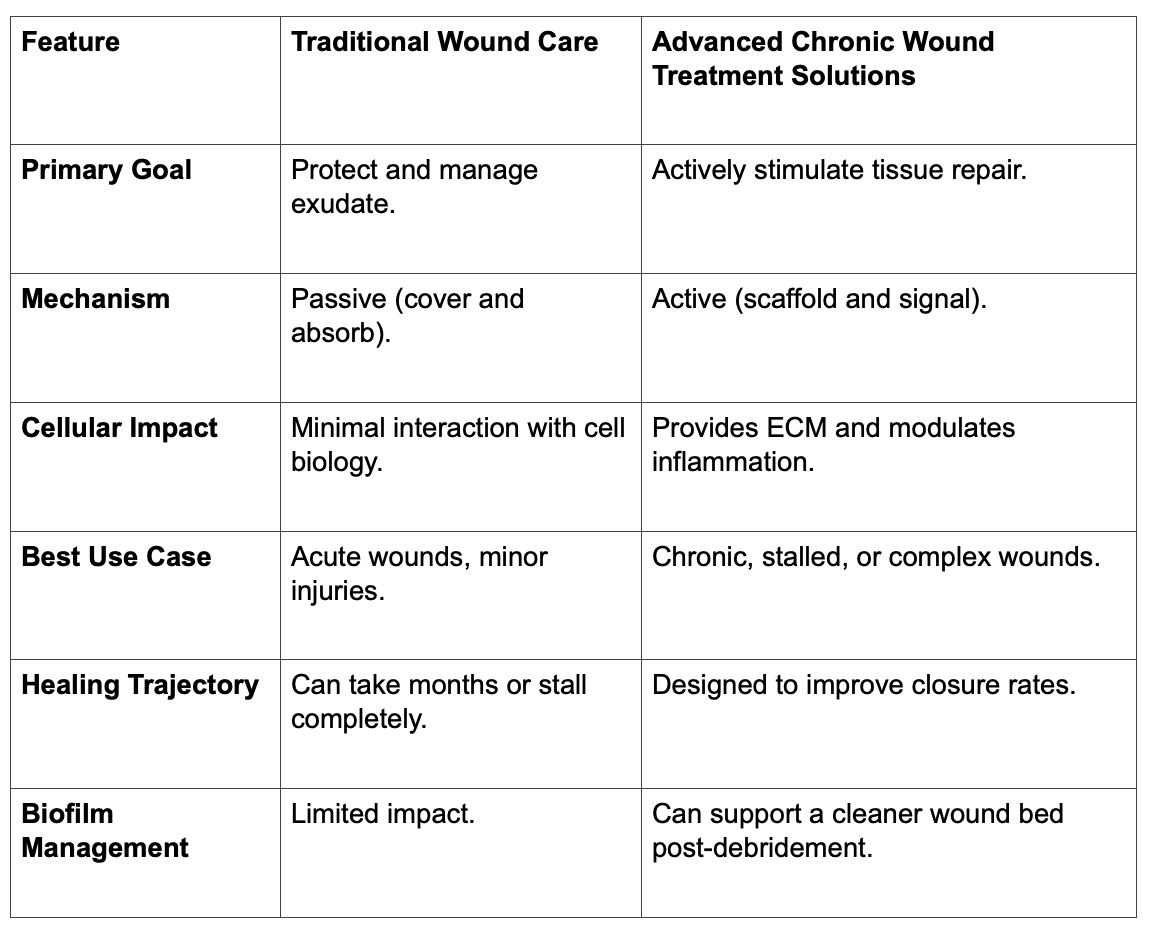
Comparison: Traditional vs. Advanced Wound Care

treatment wound comparison

When to Implement Advanced Solutions

Knowing when to switch strategies is critical for both patient outcomes and practice efficiency.

You should consider advanced chronic wound treatment solutions when:

Waiting too long to escalate care increases the risk of infection, hospitalization, and even amputation. Early intervention with the right biologic can prevent these drastic outcomes.


Your Partner in Advanced Healing

Adopting advanced chronic wound treatment solutions is a clinical upgrade. But we know it presents administrative challenges. Many providers hesitate because of the paperwork, the fear of reimbursement clawbacks, or the complexity of ordering biologics.

This is where RenewMed steps in. We’re your White Glove Service partner, integrating the entire process into your practice.

We Handle the Heavy Lifting

We manage the product logistics, so you can focus on patient care.


Frequently Asked Questions (FAQs)

Are these advanced treatments covered by Medicare?

Yes, generally. Medicare covers specific advanced skin substitutes to treat chronic wounds, like Diabetic Foot Ulcers (DFUs) and Venous Leg Ulcers (VLUs). However, standard care must have failed, and the needed documentation requirements must have been met.

How do I know which graft size to order?

We assist with this. Grafts come in various sizes (measured in square centimeters). Minimizing waste is important for compliance and cost. Our team helps you match the product inventory to your patient needs.

Is the application process difficult?

No. Applying an amniotic graft is straightforward and can be done in the office setting. It typically involves:

  1. Debriding the wound.
  2. Placing the graft.
  3. Covering it with a non-adherent dressing.

How quickly will I see results?

While every patient is different, many clinicians report seeing positive changes in the wound bed within weeks of the first application.

Do I need to store these products in a special freezer?

It depends on the specific product line. Some are cryopreserved and require specific low-temperature storage. Others are dehydrated and shelf-stable at room temperature.

We help you choose the option that fits your facility’s capabilities.


Achieving Predictable Outcomes

Stalled wounds don’t have to remain that way. Advanced chronic wound treatment solutions provide the biological boost necessary to overcome the cellular limitations of chronic wounds.

Integrating these therapies into your practice protects your patients from prolonged suffering and sets your clinic apart as a leader in wound care.

Let’s discuss how we can support your practice.

Contact our team today.

Advance your clinical potential. Partnering for better outcomes, every single day.


Sources Used

  1. https://pubmed.ncbi.nlm.nih.gov/12766127/
  2. https://pmc.ncbi.nlm.nih.gov/articles/PMC3623589/
  3. https://www.magonlinelibrary.com/doi/abs/10.12968/jowc.2017.26.1.20
  4. https://www.frontiersin.org/journals/cell-and-developmental-biology/articles/10.3389/fcell.2020.00773/full
  5. https://onlinelibrary.wiley.com/doi/10.1111/iwj.12140


Disclaimer: This content is created for licensed healthcare professionals, offering educational insights into wound care. It is not intended as medical advice or to replace your own clinical judgment when treating patients. We're here to support you, but the final treatment decisions should always be based on your professional evaluation of each unique patient's needs.

Why Traditional Chronic Wound Treatment Is Not Enough

A chronic wound isn’t just a slow-healing injury or a wound that won’t heal. For millions of Medicare patients, it threatens their independence. For you, the provider, chronic wound treatment represents a complex clinical challenge.

When standard dressings and basic debridement fail to produce results, sticking to the status quo isn't an option.

To improve outcomes, we have to understand why traditional care stops working and how modern biologics can restart the healing process.


Why Standard Chronic Wound Treatment Stalls

Standard of Care (SOC) usually involves moist wound therapy, debridement, and infection control. While this works for acute (fresh) wounds, SOC often falls short for chronic cases. The reason lies in the molecular environment of the wound.

These wounds often get stuck in a chaotic state of inflammation. High levels of enzymes called matrix metalloproteinases (MMPs) eat away at growth factors and essential proteins faster than the body can make them.

On top of that, biofilm is present in all chronic wounds. Without effective debridement, this bacterial shield makes many topical treatments useless and prevents healing.

Before you can treat the wound effectively, you must break these barriers. And basic dressings cannot fix these underlying biological issues.

Innovative Biologic Solutions

When a wound stalls, it needs a wake-up call. This is where advanced chronic wound treatment using biologic skin substitutes makes a difference.

Unlike passive dressings that just cover the area, these products are active healing participants.

How Biologics Improve Treatment

● Bioactive Matrix. It rebuilds the frame (extracellular matrix), giving cells a fresh scaffold to climb and grow on.

● Growth Factor Delivery. They bring in essential signaling molecules that chronic wounds are missing.

● Recruiting Stem Cells. They signal the body’s own stem cells to come to the injury site and start repairing.

Switching to a biologic approach helps turn a stalled, chronic environment into an acute, healing one.

Benefits for Your Patients and Practice

Shifting to advanced modalities offers clear benefits. Studies show that using cellular and tissue-based products (CTPs) significantly increases the percentage of wounds that close completely.

For your patient, effective chronic wound treatment means less pain, better mobility, and a lower risk of severe complications like bone infection or amputation.

For your practice, it means treating patients more effectively, freeing up your schedule, and providing a higher standard of care.

Supporting Your Treatment Protocols

The admin of adopting advanced therapies can be overwhelming. Insurance pre-authorizations, product ordering, and billing rules often stop providers from using the best tools available. RenewMed exists to solve this problem. We’re your distributor and support, streamlining the business side of wound care.

Our White Glove Service:

● Assigns a Personal Consultant to your practice to manage the logistics.

● Handles the Insurance Verification Requests (IVR) to ensure patient eligibility.

● Provides the documentation templates you need to prove medical necessity.

● Ensures our products are on the Medicare Average Sales Price (ASP) list, for a smoother, faster reimbursement for your practice.

By managing the 'business' of medicine, we let you focus entirely on the 'practice' of medicine.

Frequently Asked Questions

What is a chronic wound?

It is a wound that has not healed or significantly improved after 30 days of standard care.

What is the main cause of chronic wounds?

Poor blood flow, diabetes, and prolonged pressure are the most common causes. These issues stop the natural healing process.

How does biofilm affect chronic wound treatment?

Biofilm acts like a shield for bacteria, protecting them from antibiotics and the immune system. This keeps the wound inflamed and prevents healing.

When should I switch to advanced products?

If you don't see the wound shrink by about 50% after 4 weeks of optimal standard care, it's time to look at advanced therapies.

Does RenewMed help with product selection?

Yes. We offer a portfolio of products and can provide clinical information to help you select the best graft for the specific wound type.

Does RenewMed help with insurance appeals?

Yes. Our billing partners specialize in wound care. They can help you manage claims and appeals to protect your revenue.

Is reimbursement difficult for these treatments?

It can be tricky. However, our White Glove Service includes access to billing partners who help with claims and appeals.


Upgrade Your Standard of Care

Effective chronic wound treatment means using better tools when basic care fails. By using advanced biologics and a partner who handles the administrative burden, you ensure your patients get the best chance to heal. CTA: Reach out to RenewMed today. We’ll help you stop managing wounds and start healing them.

Advance your health. Empowering providers, healing patients.


Sources Used 1. https://www.mdpi.com/2077-0383/14/22/8121 2. https://pmc.ncbi.nlm.nih.gov/articles/PMC5426882/ 3. https://woundsinternational.com/wp-content/uploads/2024/12/MULTI24_CD_Skin-substitues_WINT_WEB.pdf 4. https://pubmed.ncbi.nlm.nih.gov/39841083/ 5. https://www.cms.gov/Medicare/Coverage/DeterminationProcess/downloads/id109TA.pdf


Disclaimer: This content is created for licensed healthcare professionals, offering educational insights into wound care. It is not intended as medical advice or to replace your own clinical judgment when treating patients. We're here to support you, but the final treatment decisions should always be based on your professional evaluation of each unique patient's needs.

How to Treat Arterial vs. Venous Ulcers Effectively

Two patients present with lower leg ulcers. At a glance, the wounds seem similar, but the underlying causes of arterial and venous ulcers are complete opposites.

One is caused by a blood flow "delivery" problem (ischemia), the other by a "return" problem (venous hypertension).

This distinction is critical. The best treatment for one is harmful to the other. Getting the diagnosis right from the start is the most important step toward wound healing.


Arterial vs. Venous Ulcers: Know the Difference

Accurate identification begins with understanding what causes each type of ulcer and knowing the distinct signs they present.


Venous Ulcers: A "Return" Problem

Venous ulcers are the most common type of leg ulcer.

They happen when the valves in a patient's leg veins fail to work correctly, a condition known as venous hypertension. This causes blood to pool in the lower legs, increasing pressure and breaking down the skin.


Characteristics

● Location. Typically found in the "gaiter area," between the ankle and the knee.

● Appearance. Often large and shallow with irregular borders.

● Drainage. Usually have moderate to heavy fluid drainage or exudate.

● Surrounding Skin. The skin may be swollen and have a brownish discoloration from iron deposits (hemosiderin staining) or show signs of hardening (lipodermatosclerosis).

● Pain. Discomfort often improves when the legs are elevated.

● Physical Exam. Pedal pulses are typically present and palpable.

● Patient History. Often associated with a history of Deep Vein Thrombosis (DVT), obesity, or jobs involving prolonged standing.


Arterial Ulcers: A "Delivery" Problem

Arterial ulcers are caused by poor circulation from blocked or narrowed arteries, a condition called ischemia. This is often due to peripheral arterial disease (PAD).

The tissue simply doesn't get enough oxygen-rich blood to survive, and an ulcer forms.


Characteristics

● Location. Often appear on the feet, heels, tips of toes, or between the toes, where circulation is poorest.

● Appearance. Tend to have a "punched-out" look, appearing deep with well-defined, even borders. The wound bed itself is often pale, gray, or yellow with little to no drainage.

● Surrounding Skin. The skin may be cool to the touch, shiny, and hairless. Patients often report severe pain, especially at night or when their legs are elevated.

● Pain. Pain is often severe, especially at night (rest pain) or when the legs are elevated. It may be relieved by dangling the feet over the side of the bed.

● Physical Exam. Pedal pulses (dorsalis pedis and posterior tibial) are often weak or absent. The toes will have a long capillary refill time.

● Patient History. Patients may report cramping pain in the calf during exertion (intermittent claudication). Risk factors include smoking, diabetes, high cholesterol, and hypertension.


Why an Accurate Diagnosis Is Crucial

The causes of arterial vs. venous ulcers are significantly different, which means their treatments are too. An incorrect diagnosis can lead to a therapy that makes the wound worse.

For example, the cornerstone of venous ulcer treatment is compression.

However, applying compression to an arterial ulcer is extremely dangerous. It would further restrict already poor blood flow and could lead to tissue death and potential amputation.

Using a diagnostic tool like the Ankle-Brachial Index (ABI) is crucial to assess blood flow and confirm the diagnosis before starting any treatment.

● An ABI result of less than 0.9 suggests PAD.

● A result below 0.5 indicates severe disease. Do NOT use compression.

● An ABI between 0.8 and 1.4 generally shows that compression is safe.


Contrasting Treatment Approaches for Arterial vs. Venous Ulcers

Once you have an accurate diagnosis, the treatment paths become clear and distinct.


Treating Venous Ulcers

The primary goal is to manage the underlying venous hypertension. This is achieved mainly through compression therapy, which helps the veins push blood back toward the heart.

Treatment also involves elevating the legs and using dressings that can effectively absorb heavy drainage to protect the surrounding skin.


Treating Arterial Ulcers

Here, the focus is entirely on restoring blood flow to the area. This often requires a referral to a vascular specialist for procedures that can open the blocked arteries (revascularization).

Compression therapy should never be used unless under specific guidance.

Wound dressings are chosen to keep the wound moist and protected without putting any pressure on the limb.

Patients will also have to make lifestyle changes, quitting smoking and managing risk factors like diabetes and high blood pressure.


The "Third" Diagnosis: Mixed-Aetiology Ulcers

Unfortunately, many patients don't fit neatly into one category. A significant number of patients (about 20%) have both venous and arterial disease present.

This diagnosis requires a careful balancing act. It can involve modified or reduced compression under expert management to avoid compromising arterial supply.


Advanced Solutions for Complex Chronic Wounds

Addressing the underlying cause is the first step. Yet, some chronic arterial and venous ulcers still struggle to close and require advanced support. That's where RenewMed helps. We're a national distributor of the highest quality skin substitute grafts.

These advanced products provide a scaffold for the body's own cells to build new tissue, which is essential for healing complex wounds. Our team understands the nuances of arterial vs. venous ulcers and helps you choose the right product for each specific condition.

We also offer a White Glove Service to handle the admin.

It's a full-service support system designed to handle the administrative and financial complexities. Your dedicated consultant manages insurance verifications, ordering, and partners with billing experts for timely payments.

Now you can focus on patient outcomes while we handle the rest.


Let's talk about advancing your health care.

Together, we can make a difference, one patient at a time.


Sources Used 1. https://geekymedics.com/leg-ulcers/ 2. https://blog.wcei.net/venous-ulcers-vs-arterial-ulcers 3. https://pmc.ncbi.nlm.nih.gov/articles/PMC1363917/ 4. https://www.healogics.com/wound-care-patient-information/arterial-venous-ulcers/ 5. https://www.medicalnewstoday.com/articles/arterial-vs-venous-ulcers 6. https://med.stanford.edu/stanfordmedicine25/the25/ankle-brachial-index.html


Disclaimer: This content is created for licensed healthcare professionals, offering educational insights into wound care. It is not intended as medical advice or to replace your own clinical judgment when treating patients. We're here to support you, but the final treatment decisions should always be based on your professional evaluation of each unique patient's needs.

How Diabetic Wound Healing Ointment Supports Faster Recovery

It's a familiar challenge in wound care: a diabetic ulcer that refuses to heal.

Despite consistent debridement (removal of damaged tissue) and standard protocols, the wound remains stalled week after week. This scenario highlights a critical need for specialized tools designed for the unique physiology of diabetic patients. A targeted diabetic wound-healing ointment is one of those essential tools. It helps create an environment that supports the body's compromised healing process.


Why Diabetic Wounds Demand Specialized Care

Treating a diabetic wound is different from managing an acute injury. Several underlying factors are actively working against the healing process.

● Hyperglycemia (high blood sugar) makes it harder for the patient's white blood cells to fight off infection. It also compromises the body's ability to manage bacteria effectively.

● On top of that, poor circulation means less oxygen and fewer nutrients make it to the wound.

● Neuropathy (nerve damage) can also prevent patients from noticing an injury until it's severe.

Together, these issues stall healing. They often lead to chronic inflammation and a wound that stays open and vulnerable for more than 30 days.


What Is a Diabetic Wound-Healing Ointment?

A diabetic wound-healing ointment is created specifically for these challenges. It's not your standard over-the-counter antibiotic ointment for general lacerations.

Instead, it manages a chronic wound's environment for optimal healing.

This means it controls moisture levels, reduces the bacterial load, and soothes inflammation. The right ointment works with the body. It helps a stalled wound get back on its healing course.

Diabetic wound-healing ointment is an integral part of any comprehensive wound care strategy.


Benefits of Using Diabetic Wound-Healing Ointments

Using the correct ointment gives your patients distinct advantages, especially as each benefit can solve a common chronic diabetic ulcer recovery roadblock.

It Helps Soothe Inflammation

Chronic wounds are often stuck in a prolonged inflammatory phase. A quality diabetic wound-healing ointment has ingredients that help soothe inflammation. This lets the wound move into the tissue-building phase of healing.

It Keeps the Wound Moisture Balanced

Proper moisture control is vital for wound healing. A wound bed must be moist, but not wet, to heal properly.

● If it's too dry, new cells can't move across the surface.

● Too wet, however, can lead to maceration (breakdown) of the surrounding skin.

A quality ointment helps maintain the perfect moisture balance needed for recovery.


It Fights Harmful Bacterial Biofilm

All chronic wounds contain biofilm. It's the main reason they don't heal.

Many specialized ointments have antimicrobial properties. These properties help reduce the bacteria and disrupt the biofilm without harming the healthy, new tissue.

It Can Stimulate Tissue Regeneration

Some advanced formulas contain ingredients that support the body's own cell activity. This helps encourage new tissue to form, which is precisely what you need to close the wound.


Choosing a High-Quality Diabetic Wound-Healing Ointment

You have to carefully review the formula before selecting a product. Some ingredients are unnecessary, and others can cause more harm than good.


 What Your Patients Need in an Ointment

● Evidence-based ingredients. You want components that have solid data to back up their use in wound care.

● Antimicrobial properties. It should help manage bacteria without harming the wound bed.

● Moisture regulation. It must be able to add moisture to a dry wound or absorb fluid from a wet one.

● A gentle, non-irritating base. Make sure it's free of common allergens that could cause more skin issues.


What to Avoid in Ointment Formulations

● Harsh chemicals. Steer clear of ingredients like hydrogen peroxide or alcohol that can be toxic to new cells.

● Fragrances or dyes. These don't add any healing benefit and can easily irritate the skin.

● Common allergens. Always be mindful of ingredients that could trigger a contact dermatitis reaction.

● Drying agents. Avoid anything that could dehydrate the wound bed and stop the healing process.


Comprehensive Solutions for Advanced Healing

A diabetic wound-healing ointment is a fundamental tool. But some chronic wounds might need a more advanced solution to close fully. RenewMed specializes in supplying state-of-the-art wound care treatments. We're a national distributor of the best-in-class skin substitute grafts.

These bioengineered products give the body a scaffold to build new tissue and heal the wound. We know that bringing new treatments into your practice can be complex, which is why we created our White Glove Service.

It's a full-service support system that removes the administrative and financial headaches.

Your dedicated consultant handles the insurance verifications, prior authorizations, and ordering. We also have expert billing partners to help with documentation, so you get timely payments.

Our service lets you advance your health care. You focus on your patient; we handle the rest. H4: Contact us today to learn more.

Together, we can make a difference, one patient at a time.


Sources Used 1. https://pmc.ncbi.nlm.nih.gov/articles/PMC5875034/ 2. https://www.medicalnewstoday.com/articles/320739 3. https://pmc.ncbi.nlm.nih.gov/articles/PMC8568799/ 4. https://eurjmedres.biomedcentral.com/articles/10.1186/s40001-023-01121-7 5. https://www.hmpgloballearningnetwork.com/site/wounds/article/1585


Disclaimer: This content is created for licensed healthcare professionals, offering educational insights into wound care. It is not intended as medical advice or to replace your own clinical judgment when treating patients. We're here to support you, but the final treatment decisions should always be based on your professional evaluation of each unique patient's needs.