
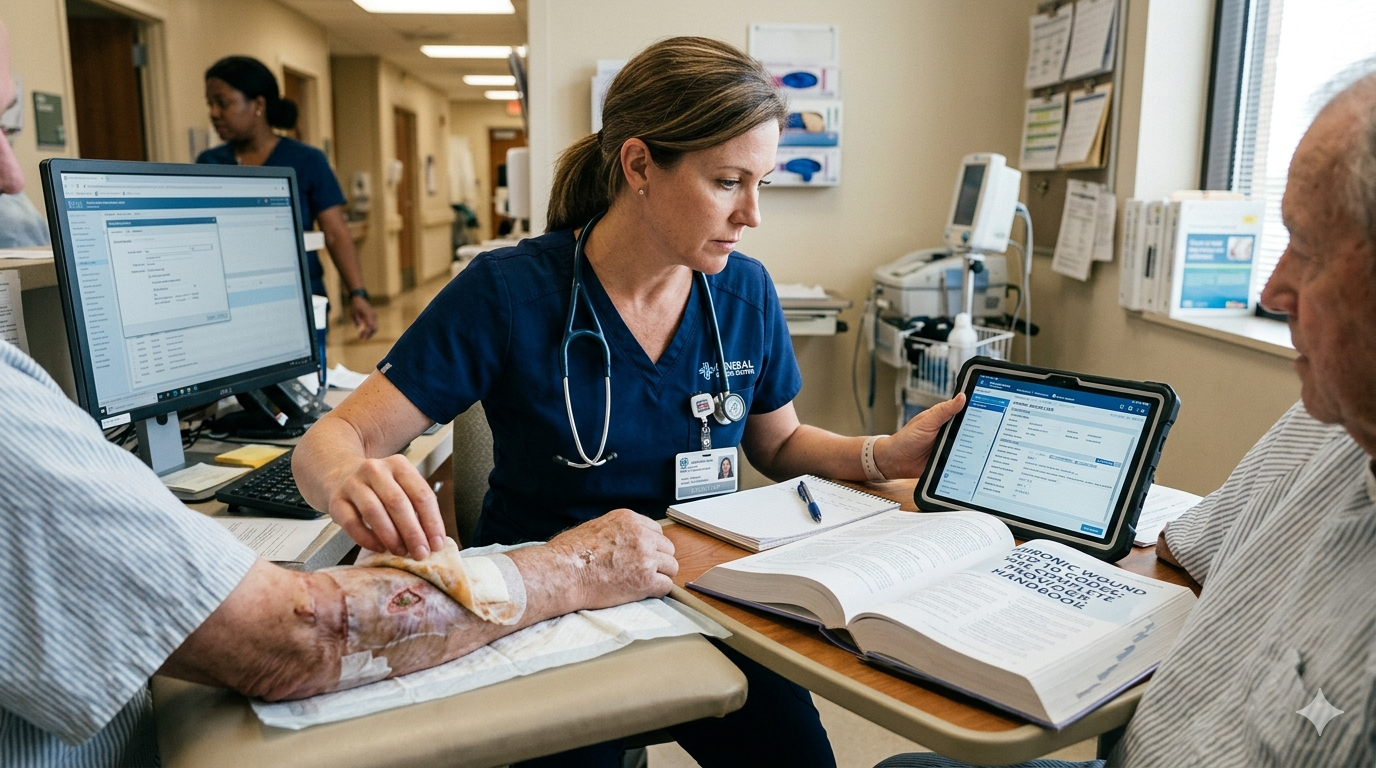
In wound care, clinical excellence is only half the battle. You can heal a difficult wound, but if you submit the wrong code, you won't get paid.
The world of chronic wound ICD-10 codes is vast and specific. It requires attention to detail that can feel overwhelming after a long day of patient care.
However, accuracy is your best tool for revenue protection. In 2026, payers are rejecting unspecified codes at record rates. They want to know exactly whatthe wound is, where it is, and how deep it is. A generic code often leads to a generic denial.
The most common mistake providers make is using "unspecified" codes. These are codes that usually end in the number 9.
For example, L97.509 means: Non-pressure chronic ulcer of other part of unspecified foot with unspecified severity. To an insurance company, this code says, you don't know which foot it is, or how bad the wound is. This triggers a denial.
You must always document:
Coding Diabetic Foot Ulcers (The Combo Rule)
Diabetic foot ulcers (DFUs) are the most common reason for using skin substitutes. But coding them requires two distinct steps. You can’t only use one code.
You must start with the diabetes code.
The code E11.621 tells the payer that it is a diabetic ulcer. It does not tell them where on the foot. You must add a code from the L97 series to identify the site and severity.
For example, a diabetic ulcer on the left heel with fat exposure, would be billed:
If you only submit E11.621, the claim may be rejected as incomplete.
Pressure injuries (bedsores) have their own category: L89. These codes are strictly defined by site and stage.
The Structure: L89.[Site][Stage]
Common Codes:
Staging Specificity:
Tip: If you debride a wound and can finally see the base, update your coding! Do not keep billing unstageable if you have now staged it as Stage 3.
Confusing venous and arterial ulcers is a common clinical and coding error. They have different causes and different codes.
These are caused by chronic venous insufficiency.
These are caused by atherosclerosis or poor blood flow.
Note: The I70 series is a combination code that includes both the disease and the ulcer location. You often do not need a separate L97 code for these, unlike venous ulcers.
Sometimes a surgical site fails to close. This is not a pressure or diabetic ulcer. It’s a complication.
Medicare requires your code to match your clinical description exactly.
For Stalled Wounds (Non-Healing)
For Dehisced Wounds (Split Open)
Critical
Coding is complex, but you don't have to guess. RenewMed’s White Glove Service includes comprehensive compliance support designed to protect your practice revenue and reputation.
Our team helps you in four specific ways:
We ensure the diagnosis code you use supports the medical necessity of our skin substitutes. We help you understand which ICD-10 codes are approved for reimbursement with our specific grafts, preventing experimental or investigational denials.
We review your commonly used codes to spot dangerous patterns, like the overuse of unspecified codes, that might invite an audit. We provide cheat sheets and quick-reference guides tailored to your specific product mix.
If a claim is rejected due to a coding error, our billing partners can help you identify the mistake, correct the code (if appropriate), and resubmit. We don't just sell you a product; we stand by you until you are paid.
ICD-10 codes change every October. We keep track of deleted codes and new specificity requirements so you don't have to. We alert you to changes that affect wound care before they become a problem for your billing cycle.
Accurate coding is the foundation of a healthy practice. It enables you to focus on what you do best, healing patients.
Can I use L97 codes for pressure ulcers?
No. L97 is for Non-pressure chronic ulcers. You must use the L89 series for pressure injuries. Using L97 for a bedsore is a coding error.
What if I don't know the depth of the wound?
You should determine the depth during your exam. If you truly can’t see the base due to slough, use the Unstageable code (for pressure) or unspecified severity (for L97), but try to resolve this quickly. Consistent use of unspecified leads to denials.
Do I code the diabetes or the ulcer first?
Always code the underlying condition first. Code E11.621 (Diabetes) as primary, and L97 (The ulcer site) as secondary.
How do I code a wound that is healing?
You continue to use the active wound diagnosis code as long as you’re providing active treatment (like debridement or grafts). Do not use "history of" codes until the wound is fully closed.
How does RenewMed help with coding?
We provide coding guides and cheat sheets for our products. Our billing partners can also answer specific questions about which codes are currently accepted by Medicare for our grafts.
Correct chronic wound ICD-10 codes are more than just numbers. They’re the language that tells the story of your patient's sickness and your skilled care. By mastering this language, you ensure your practice thrives.
RenewMed is your partner in this journey. We provide the products, the training, and the support you need to succeed.
Let’s get your coding and healing on the right track.
Together, we can save limbs and change lives.
Sources Used
Disclaimer: This content is created for licensed healthcare professionals, offering educational insights into wound care. It is not intended as medical advice or to replace your own clinical judgment when treating patients. We're here to support you, but the final treatment decisions should always be based on your professional evaluation of each unique patient's needs.
